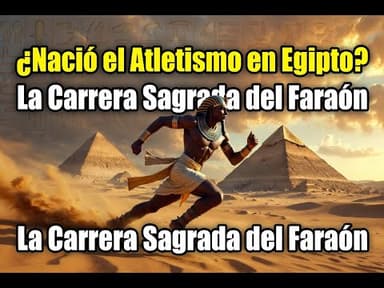
The Sacred Running of the Pharaohs: How Ancient Egypt Transformed Athletics Into Divine Ritual
Crónicas del AtletismoAI summary of “The Sacred Running of the Pharaohs: How Ancient Egypt Transformed Athletics Into Divine Ritual” by Crónicas del Atletismo, generated by Sumvid.
Title
The Sacred Running of the Pharaohs: How Ancient Egypt Transformed Athletics Into Divine Ritual
One-Sentence Summary
Ancient Egyptian pharaohs used running—particularly during the Heb Set festival—as a sacred ritual to maintain cosmic balance and prove their divine legitimacy rather than as competitive sport.
Key Takeaways
- [0:31] The ancient Egyptians pioneered athletics not for competition or medals, but to maintain Maat, the cosmic order and universal harmony that was fundamental to their civilization.
- [1:01] The pharaoh served as a bridge between gods and mortals, and running became the primary way to prove his worthiness and continued divine support for his rule.
- [1:34] The Heb Set Festival of Renewal was a sacred trial where the pharaoh ran alone against time in a ceremonial circuit, with success proving his physical and spiritual strength to both gods and people.
- [2:05] Each stride of the pharaoh's race was a symbolic act of prayer in motion, designed to recharge his divine power and ensure Egypt's prosperity through harvests, water flow, and military victories.
- [2:37] The pharaoh's body was viewed as a microcosm of the state—if the ruler was healthy and strong, the entire kingdom would flourish accordingly.
- [3:10] Beyond the pharaoh's sacred running, young noblemen trained extensively in wrestling, swimming, rowing, and archery as essential preparation to serve the state.
- [4:12] Ancient Egyptian athletics originated from religious and political necessity rather than competition, fundamentally different from modern sport's purpose of personal achievement.