Types of Market Structures: From Perfect Competition to Oligopoly
Carlos Albert MagroAI summary of “Types of Market Structures: From Perfect Competition to Oligopoly” by Carlos Albert Magro, generated by Sumvid.
Title
Types of Market Structures: From Perfect Competition to Oligopoly
One-Sentence Summary
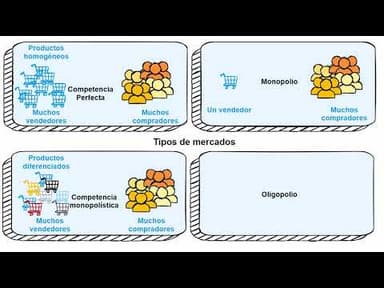
The video explains the four main market structures—perfect competition, monopolistic competition, oligopoly, and monopoly—and how they differ in terms of the number of sellers, product differentiation, and pricing power.
Key Takeaways
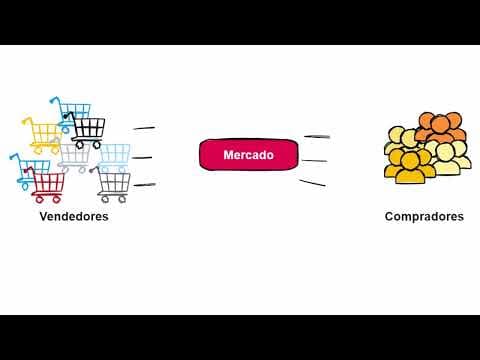
- [0:03] Perfect competition is characterized by many sellers offering homogeneous products to many buyers, resulting in prices that adjust efficiently based on market forces, making it the most efficient market model.
- [0:34] Monopolies are the opposite extreme, where a single seller offers products to many buyers, giving the seller significant power to set higher prices and resulting in a less efficient market.
- [1:05] Companies attempt to differentiate their products from competitors to gain market power and move closer to monopolistic conditions, which leads to monopolistic competition—a market model that describes most real-world markets.
- [1:36] In monopolistic competition, many sellers differentiate their products to appeal to different customer segments; the automotive industry exemplifies this, with different manufacturers targeting different economic levels and consumer profiles within the broader market.
- [2:38] Oligopoly occurs when there are very few sellers rather than just one, allowing these sellers to exert considerable control over pricing and resulting in higher prices compared to more competitive markets.
- These market structure models are theoretical frameworks rather than perfectly realized real-world conditions, but they serve as useful tools for understanding how markets function.
Suggested Category Tags
More from Carlos Albert Magro
Direct vs. Indirect Distribution Channels in Marketing

The Sales Process: Phases and Documentation in Commercial Operations
The Business Procurement Process: From Specifications to Payment
Types of Markets: Industrial vs. Consumer Markets and Service Markets
Understanding Markets: Insights from Nobel Laureate Paul Samuelson
Classification of Companies by Economic Sector